Taking Money Out of Your Company: A Guide to Dividends

Taking Money Out of Your Company: The Comprehensive Guide to Dividends
Taking money out of your company isn’t as simple as moving cash from one account to another. If you want to stay on the right side of HMRC, dividends need to be handled properly.
For most limited company owners, dividends are the most tax-efficient way to take an income. However, there are strict rules to follow—and getting it wrong can lead to unexpected tax bills or compliance issues.
What exactly is a Dividend?
Think of a dividend as a reward for the shareholders. It is a payment made from the company’s post-tax profits.
To be “legal,” a dividend must be:
-
Paid from real profit: This is what’s left over after Corporation Tax is accounted for.
-
Paid to shareholders: In proportion to the number of shares they own (unless you have specific “alphabet” share classes).
-
Documented: Even if you are the only director and shareholder, you must formally “declare” the dividend.
Checking Your Numbers: Can You Afford It?
To work out if you can pay a dividend, you look at your Retained Profit. This is usually found in your latest annual accounts, but you must factor in what has happened since then.
-
If the position has worsened: If your company has made losses since your last accounts, those losses reduce the profits available for dividends. The longer it’s been since your year-end, the more important it is to check up-to-date figures.
-
If the position has improved: If profits have increased, you can take more in dividends, but you’ll need “interim” (management) accounts to prove those profits exist.
The Solvency Test: A key point often missed is whether the company can still pay its debts (VAT, PAYE, suppliers) after the dividend is paid. If taking the money puts the business under financial pressure, it’s a red flag.
The Paperwork (Yes, it matters!)
HMRC does not like “casual” withdrawals. If they see money leaving your account without a paper trail, they may try to reclassify it as a salary—which comes with a much higher tax and National Insurance bill.
To stay compliant, you should have:
-
A Board Minute: A simple formal record stating that the directors met and agreed to pay the dividend.
-
A Dividend Voucher: A “certificate” for the shareholder showing the date, the company name, and the amount paid.
Best Practices for Business Owners
To keep your books tidy and your tax position clear, we recommend following these “Golden Rules”:
-
✔ Take dividends regularly: Rather than one huge lump sum at the end of the year, regular payments help smooth your personal cash flow and keep your records consistent.
-
✔ Review your figures first: Don’t rely on a “gut feeling.” Check your management accounts to ensure the profit is actually there.
-
✔ Avoid backdating: Dividends should be recorded when they are decided, not months later to “fix” the books.
-
✔ Account for your personal tax: Dividends are tax-efficient, but not tax-free. Remember that you will likely have a Self Assessment bill to pay on this income later.
Common Mistakes to Avoid
We often see the same few errors when reviewng client books. Avoiding these will save you a lot of stress:
-
Treating the company account like a personal bank account: Taking “drawings” whenever you need cash without checking the profit or doing the paperwork.
-
Forgetting the Taxman: Taking 100% of the cash in the bank and forgetting that a chunk of that belongs to HMRC for Corporation Tax.
-
Missing Records: Failing to prepare vouchers or board minutes. If it isn’t documented, HMRC may argue it isn’t a dividend.
-
Ignoring Shareholdings: Paying a “50/50” dividend to two shareholders when one person actually owns 60% of the company.
Final Thoughts
Dividends are a great way to reward yourself for the hard work of running a business—but only if they’re done properly. It’s not just about having cash in the bank; it’s about compliance, profit, and planning.
At Moore Accountancy, we can provide dividend templates and guidance tailored to your specific situation to ensure your “books” stay as healthy as your business.
News
Bookkeeping is a vital part of running any business, but [...]
Discover which business expenses you can claim as a UK sole trader or limited company. This guide explains allowable expenses, HMRC rules, and how to reduce your tax bill legally.
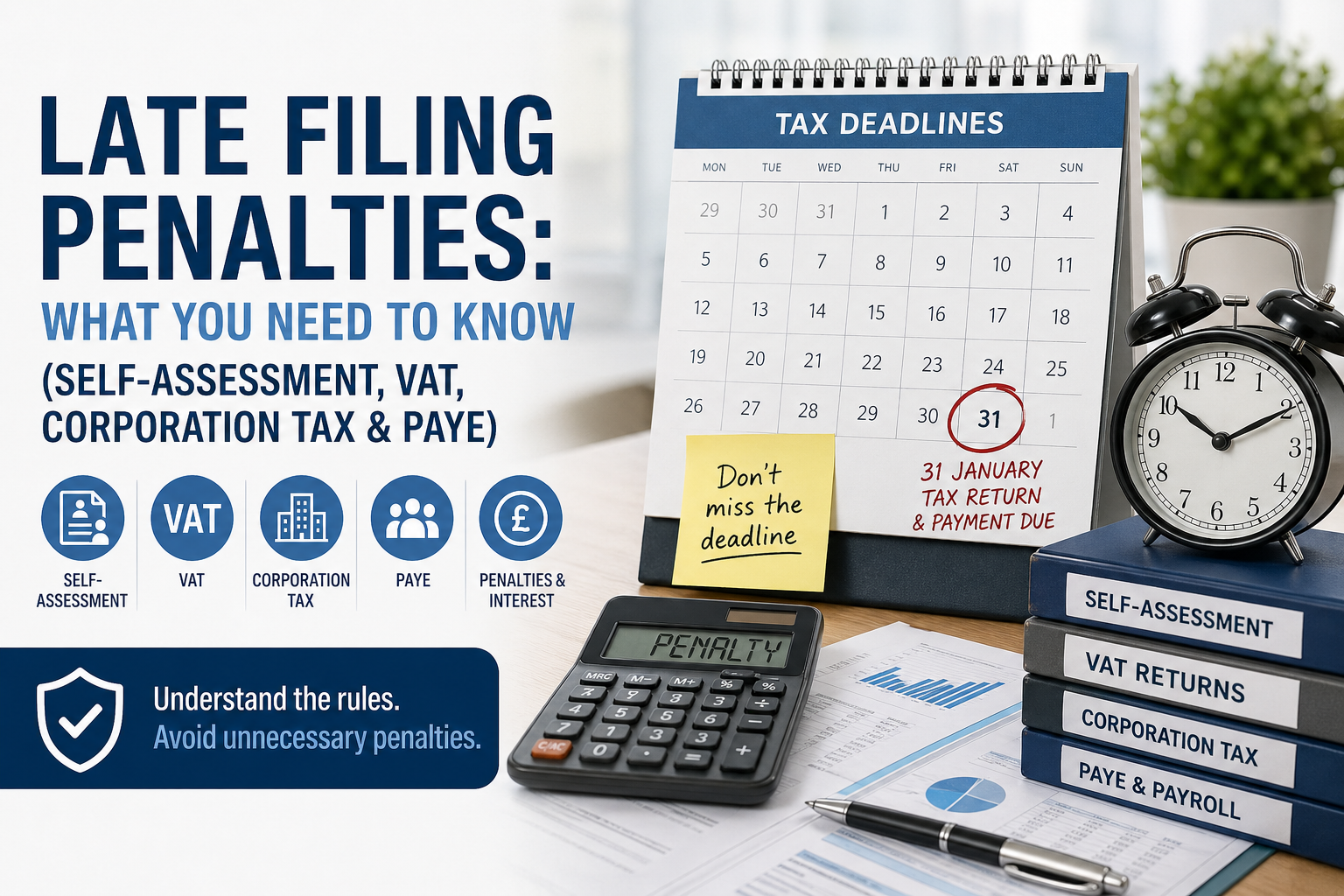
Late Filing Penalties: What You Need to Know (Self-Assessment, VAT, [...]
Taking Money Out of Your Company: The Comprehensive Guide to [...]
Nobody likes a brown envelope from HMRC, especially one containing [...]